
Product longevity
How TCO Certified helps IT products remain in use for longer

Product longevity
How TCO Certified helps IT products remain in use for longer
Longer lifespans reduce the sustainability impact of IT
The short lifespans of computers, phones, and other IT products contribute to climate impact, resource depletion, growing e-waste volumes, and pressure on working conditions in the supply chain. Keeping products in use for longer is therefore one of the most effective ways to reduce their overall sustainability impact.
TCO Certified supports product longevity through criteria for circular design, extended warranties, long-term software updates, and responsible end-of-life management. Together, these measures help products remain functional, secure, and useful for longer.
How it works
How product longevity is supported
The circularity criteria in TCO Certified are designed to give IT buyers and users confidence that devices can be used longer while remaining fully functional. They also incentivize IT brands to design and make products of better quality.





*Exceptions apply to products classified as peripherals.
The challenge
The environmental and social cost of frequent replacement
Extending the lifespan of IT products is one of the most effective ways to reduce their sustainability impact. Keeping products in use for longer lowers climate emissions and demand for natural resources, Less e-waste is generated, and it can also contribute to better social conditions in the supply chain.
Climate impact
Manufacturing IT products is energy-intensive and still largely dependent on fossil fuels. As a result, a laptop has already generated around 250 kg of greenhouse gas emissions before it is used for the first time. Keeping IT products in use for longer is therefore an important way to reduce climate impact. Longer lifespans mean fewer new products need to be manufactured over time, reducing average annual emissions.
E-waste
Short product lifespans contribute directly to growing e-waste volumes, adding to what is now the world’s fastest-growing waste stream. More than 60 million metric tonnes of e-waste are generated each year, yet less than a quarter is formally collected and safely recycled. Much of the rest is incinerated or sent to landfill, leading to pollution, health risks, and the loss of valuable finite resources. Some e-waste is also exported to regions where it may be handled through unsafe, informal processes such as open burning or acid leaching. This can release hazardous substances, contaminate soil, air, and water, and create serious risks to human health.
Natural resources
Extending the lifespan of IT products helps preserve natural resources. Today’s largely linear production and consumption patterns rely heavily on virgin materials, placing pressure on fragile ecosystems and depleting finite reserves. In 2022, e-waste was estimated to contain recoverable materials worth around USD 62 billion (approximately €60 billion), much of which was lost. Keeping products in use for longer reduces the need for new extraction, helping to protect biodiversity and limit environmental degradation.
Social responsibility
Short product lifespans cause big fluctuations in demand, requiring production to be ramped up, often at short notice. These frequent production spikes are covered by employees agreeing to excessive overtime, largely because the wages they receive fail to cover their living costs. By extending product lifetimes, the pressure for high-volume, low-cost production is reduced, supporting more stable working conditions and enabling a transition toward more ethical and sustainable labor practices in the IT industry.
Our approach
Reducing impacts through circular design, warranties and software support
Keeping IT products in use for longer depends on more than durable hardware. Products also need to be repairable, supported with software updates, and covered by warranties that make longer use a realistic option. By using TCO Certified in procurement, you ensure that all these aspects are covered.
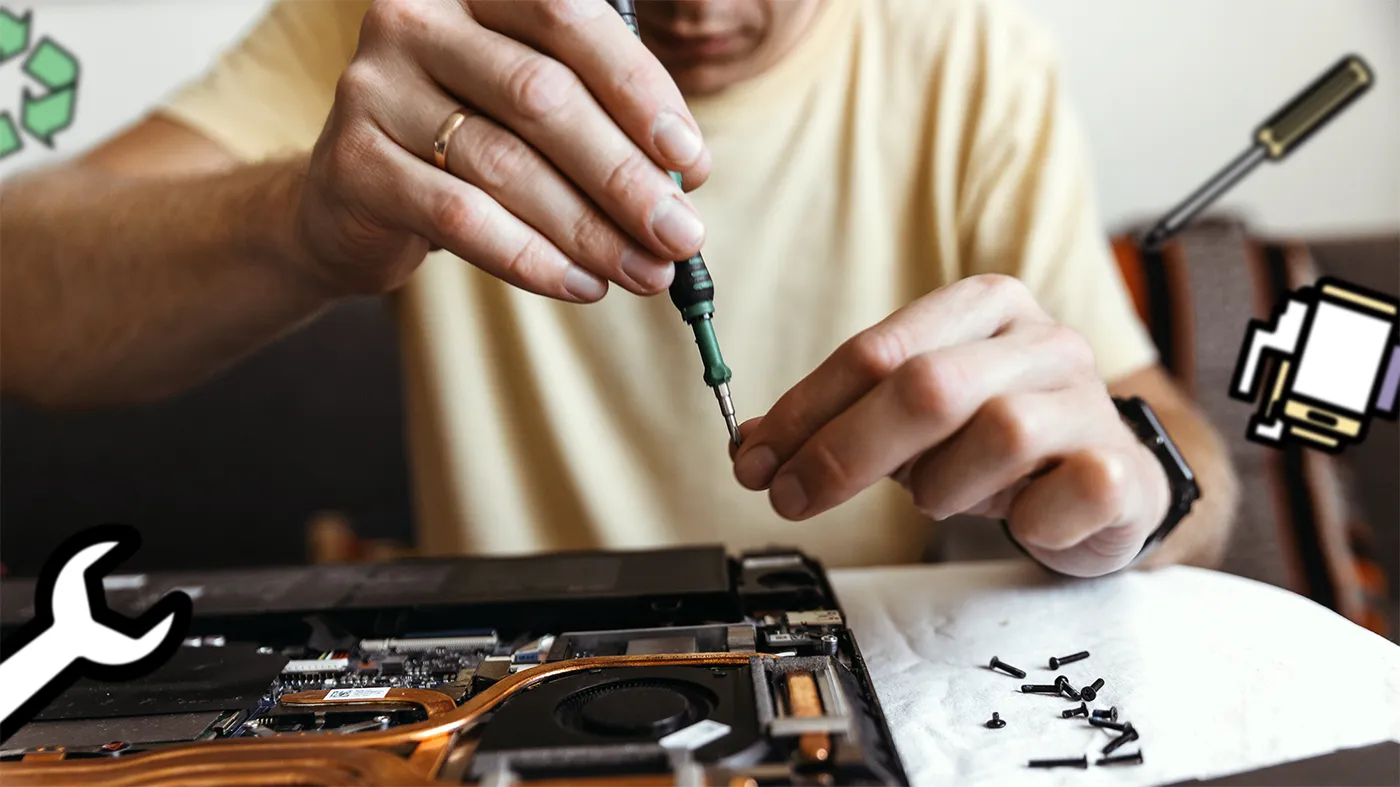
Circular design means making products that last and can be upgraded and repaired. Durability testing and access to replaceable components help prevent common points of failure from shortening a product’s useful life. Secure data removal is also essential, so products can be passed on without the risk of data leakage.
Extended warranties are a key enabler of longer product lifespans. When products fail under warranty, repair or replacement costs fall on the IT brand, creating a strong incentive to design and manufacture more durable, high-quality devices. It also gives purchasers and users the confidence to plan for longer use cycles without the risk of unexpected costs.
Security and functionality updates are essential to extending the useful life of IT products and enabling organizations to use devices with confidence. Regular security updates strengthen cyber resilience and protect sensitive data, while functionality updates resolve bugs and enhance performance. Together, they ensure products remain secure, reliable, and fit for purpose throughout their intended lifespan.
How compliance is verified
Compliance with all criteria in TCO Certified is verified by independent, accredited experts. Before a certificate is issued, products are tested, and IT brands must provide documented evidence that information about warranties and long-term software support is publicly available. This information is reviewed to ensure full compliance. Throughout the certificate’s validity period, we conduct follow-up checks to confirm continued compliance.
Helping IT purchasers plan for longer product use
A clearly defined and extended product life provides purchasing organizations with something they often lack: predictability. When products are supported for a set time — including warranties and updates — it becomes possible to evaluate options based on expected longevity, not just technical specifications or price. This enables more strategic, sustainable procurement planning and supports longer replacement cycles.
With assurance that products remain safe, functional, and supported throughout their intended use, organizations can extend device lifetimes with greater confidence — without compromising performance, data security, or user experience. Fewer replacements over time lead to lower costs, reduced administrative burden, and a substantial reduction of sustainability impacts.
Because TCO Certified criteria are global and applied consistently across markets, organizations can use a more consistent approach to IT management, regardless of where products are purchased or used.
Calculate your emission reductions
IT manufacturing is energy-intensive and has a significant climate impact. By keeping your notebook computer longer, and buying fewer devices, you can substantially lower annual emissions. Use our calculator to see the difference.
Use your notebook longer — save emissions!
Check how much you save by keeping it for more than 3 years.
For more specific calculations, check our Report Generator.
Scope 1: For the buyer and user of IT products, no emissions are scope 1.
Scope 2: Emissions from the energy required to charge and run the IT product.
Scope 3: Emissions from manufacturing, transportation and waste management.


What inspired your approach to circularity?
“One experience that sharpened my view of circularity was a visit to a large recycling facility in Sweden. Seeing the sheer volume of discarded electronics was unsettling — and a powerful reminder that we need to make much better use of the resources already invested in our products. Too many devices enter the waste stream while they still have significant value. After years of working with circularity, I see this as one of the fundamental challenges we need to solve: creating systems that recognize and preserve that value before it is lost.”
Stefan Carlberg, circularity criteria developer, TCO Certified
Develops criteria and verification methods that extend product life, support reuse and repair, and strengthen circular flows of products and materials.

What inspired you to create TCO Certified Accepted Factory List?
“The idea came to me during a visit to a factory in Asia. I noticed safety nets installed around the roof and stairwells — not for accidents, but to prevent employees from taking their own lives. That moment stayed with me. When I got home, I knew we had to work even harder to create something that could accelerate change.”
Stephen Fuller, supply chain criteria developer, TCO Certified
Develops measurable criteria and verification tools to improve working conditions, transparency, and responsible sourcing.
Background
Removing barriers to longer product life drives circular IT forward
To make IT more circular, you need to understand why products are replaced too soon and where value is lost along the way. Recycling has an important role, but it should not be the first option for a product that can still be used. That insight has shaped the development of the circularity criteria in TCO Certified. In this article, criteria developer Stefan Carlberg explains more.
“One thing I have learned from working with circularity is that an IT product represents far more value than the materials it contains. Huge amounts of energy, natural resources, knowledge, and work have already been invested before the finished product reaches its user. Raw materials have been extracted and processed, hundreds of suppliers may have been involved, and components have been manufactured, assembled, and transported around the world.
“When we are finished with a product, it is easy to focus on recycling. And of course, materials should be recovered when a product has reached the end of its useful life. But recycling too early means losing much of the value that has already been created. Many products could have a second or even a third life. They can be repaired, refurbished, resold, reassigned, or redistributed before recycling becomes the best option.

“One problem is that once a product enters the waste stream, much of this value can quickly be lost. The system for transporting products from collection points to recyclers is designed to handle waste, not functioning devices. Even a perfectly usable product can be damaged or mixed with other discarded electronics along the way, leaving little opportunity for reuse by the time it reaches the recycler. Sometimes the challenge is not whether a product still has value, but whether the systems around it are designed to recognize and preserve that value before it is lost.
“This has been an important principle in developing our circularity criteria. There is no single requirement that makes a product circular. Instead, you have to identify the weak links that can cause a product to leave use too early and address them one by one. Durability and repairability are essential, but a repairable product is of little use if spare parts are unavailable. And a fully functional device may be difficult to pass on if the previous user cannot remove their data securely. Over time, we have added criteria that strengthen these different parts of the chain.
“We also heard from IT brands about the commercial pressures they face. The market rewards low prices and high volumes, which can encourage the use of lower-cost components and give manufacturers little incentive to make products last well beyond the standard warranty period. That is one reason why we introduced requirements for extended warranties. When a product fails while it is still under warranty, the brand carries the cost of repair or replacement. A longer warranty therefore creates a direct financial incentive to improve product quality and durability.
“But better product design is still only part of the solution. We have seen that purchasing organizations often replace devices according to fixed cycles, even when the products could remain in use. Extending those cycles may be seen as a risk. What happens if devices start failing? Will security updates still be available? Will unexpected repair costs increase? These concerns can make organizations reluctant to change established practices.
“This showed us that circularity also depends on creating confidence in longer use. Purchasers need products that are durable and repairable, but they also need predictable warranty coverage and continued software support. By addressing both physical and digital obsolescence, we can remove more of the barriers that cause functioning products to be replaced.
“The lesson is that circularity needs a broad approach. Product design, repairability, spare parts, warranties, software support, secure data removal, reuse, and responsible recycling all have a role to play. The more of these weak links we strengthen, the easier it becomes to keep products and their value in use for longer — and reduce the need to manufacture new products and extract new resources.”
The result
Concrete impacts — and measurable results
Keeping IT products in use for longer brings substantial, measurable sustainability benefits. Here, we show the difference when a notebook computer is used for five years instead of three.
A major reduction in climate impact
Since most of a notebook’s lifecycle emissions come from the energy-intensive, fossil-dependent manufacturing process, extending its use significantly reduces greenhouse gas emissions. Prolonging the lifespan from three to five years cuts annual emissions from 88.9 kg to 55.4 kg — saving 33.5 kg, or almost 40%, each year. Even one extra year makes a difference: increasing use from three to four years reduces the annual footprint by 20 kg, or 23.5%. (Source: Report Generator)
Fewer devices — less e-waste
When notebook computers are used for longer periods, fewer devices are needed over time, directly reducing the amount of e-waste generated. Over a 40-year period, replacing a notebook every five years instead of every three means using eight devices instead of 14 — a reduction of 42%. This significantly lowers the volume of discarded electronics, easing the burden on waste management systems and reducing the risk of improper handling and harmful impacts on people and communities.
Natural resources are saved
Producing fewer products reduces the demand for natural resources. This effect is further strengthened by the TCO Certified criterion on responsible e-waste management, which requires IT brand owners to implement take-back systems and certified recycling practices. These measures ensure that e-waste is collected and handled responsibly — reducing the risk that discarded products are exported to vulnerable communities.
Improvements in social responsibility
Designing notebook computers for a lifespan of five years or more, and using them accordingly, can help enable social benefits across the supply chain. Longer product lifecycles contribute to more stable production volumes, reducing the need for sudden demand peaks that often lead to excessive overtime and increased pressure on workers. Higher product value can also support fairer wages and stronger social protections, helping drive more ethical and sustainable labor practices in the IT industry.
Circularity criteria in TCO Certified

What’s next
Challenging the view of how long IT products can last
Although IT products are resource-intensive to manufacture, they are often treated as disposable and discarded as soon as a fault occurs. We want to challenge that view — through technical improvements, but also by raising expectations for how long they should remain useful. Our long-term goal is for certified products to last at least ten years.
Our next steps are about pushing the industry toward a new standard for product lifespan and giving purchasers greater confidence to extend replacement cycles. We will continue to address factors that can shorten product life. This includes gradually extending warranty periods and improving access to replacement parts. Future requirements may, for example, include better availability of replacement batteries and battery replacement as part of the warranty.
We also want users to have more control over their devices. Critical components should be replaceable by users, and digital product passports will make important information easier to access, including warranty details, repair instructions, spare parts availability, and certification status.
At the same time, we will strengthen circular flows so that products, components, and valuable materials stay in use for longer. Take-back, reuse, and responsible recycling should become the norm rather than the exception.
The direction is clear: longer-lasting products, greater value over time, and less need to manufacture new products and extract new materials.
You might be interested in
TCO Certified Impact 2026: Improving traceability for more circular IT
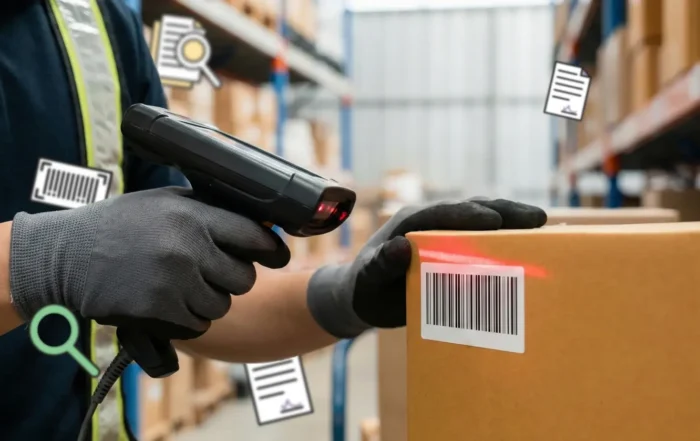
Better traceability is becoming a reality for certified IT products. More than 300,000 configurations now have standardized identifiers.
Barriers to circular IT — and how to overcome them
Learn about key challenges that stand in the way of circular IT, and how these obstacles can be removed.
33 practical tips for circular IT management
Learn what circular IT means when you buy and use IT products in this comprehensive list of practical tips.