
Focus area Supply chain
Protecting workers and the environment in the IT supply chain
Ensuring responsible practices in the IT product supply chain is a constant challenge. Issues such as excessive overtime, health and safety risks, resource overuse, pollution and waste generation need to be addressed to protect both workers and the environment.
While comprehensive and regular audits of manufacturing facilities are a good start, strict follow-up and accountability are also needed to drive long-term, positive change.

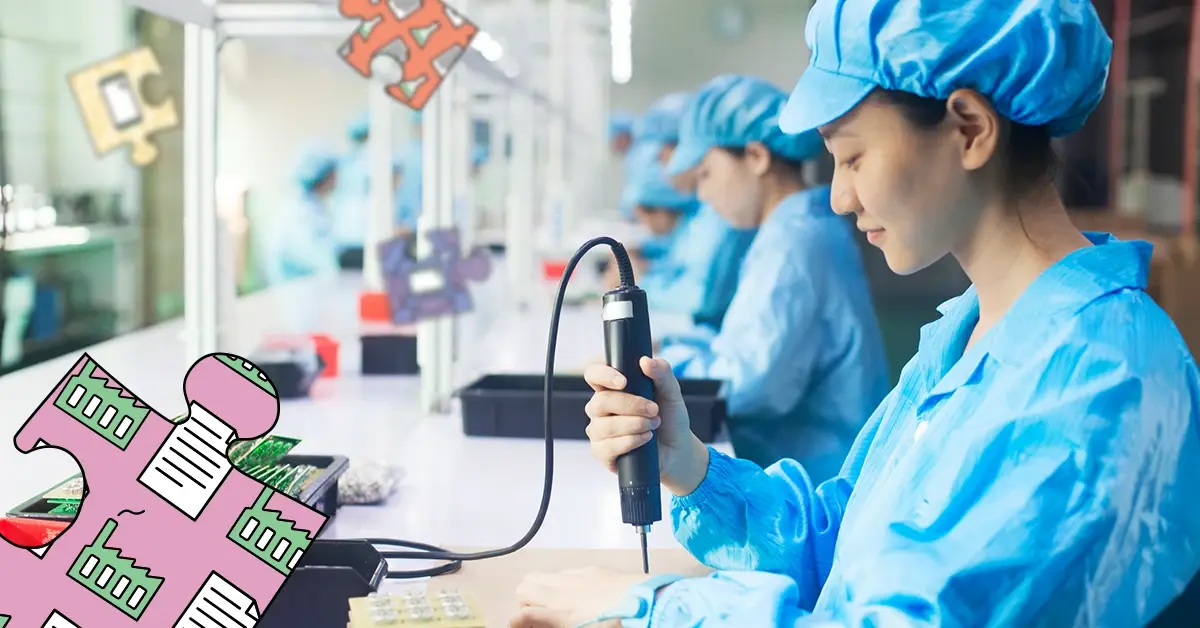
Thousands of people are involved in the production of computers, phones and other IT products, from the miners who dig up the minerals used in electronic components all the way to the workers in the final assembly factories. The supply chains are complex and often employ workers in countries where the labor market lacks clear regulation, or legislated labor rights are not enforced. This results in poor working conditions where human health and lives are at risk. Workers face various difficulties and injustices, such as forced labor, lack of freedom of association, health and safety risks, and the inability to earn a living wage without agreeing to excessive overtime. Further up the supply chain, the mineral industry is linked to armed conflicts, human rights abuses, child labor, severe health problems for workers, and environmental degradation. Bribery is a risk present in many industries, and the IT supply chain is no exception. Counteracting bribery is crucial as it hinders development, erodes justice, undermines human rights, and interferes with the fair and efficient operation of markets.


The production of IT equipment also has significant environmental consequences, including resource depletion, pollution, and waste generation. Continued reliance on virgin materials contributes to environmental degradation and water contamination. Additionally, the use of hazardous chemicals in manufacturing causes air and soil pollution. To mitigate these impacts, manufacturers must adopt sustainable product designs that extend product life, reduce material consumption and facilitate recycling.
Gaining influence in the complex supply chain
When comparing product supply chains, the IT industry exceeds all others. Production is a step-by-step process: from mines and oil fields to smelters where raw materials are refined, to the production of materials such as plastics, that are in turn supplied to component manufacturers. Finally, the components are assembled into the final product in one or several final assembly factories. A single computer or smartphone can contain thousands of components, and the network of subcontractors providing these components and raw materials includes many companies on several continents.
Long-term, systematic work brings change
Driving supply chain responsibility in the IT industry requires extensive effort on multiple levels. Clear and relevant criteria, sharper than legislation, need to be set. When requesting change, independent verification of compliance is always needed. This means carrying out regular high-standard audits. During audits, issues are often found, and it is vital to establish corrective action plans that can be implemented quickly and credibly. Follow-up of the plans and clear consequences for deviations are necessary to ensure progress.
Some issues are easy to detect and solve but tend to reoccur. Others are more complex and require greater focus and effort. In both cases, systematic work and an ongoing dialog with the responsible IT brand are essential to anticipate emerging risks and support positive, lasting change at the factory level and further up the supply chain.
Focus areas for supply chain responsibility

Labor law violations
When wages are too low, and local authorities and employers fail to enforce working hour boundaries, workers are pressured to work excessive overtime in order to earn a living wage. This leads to health problems including stress, fatigue and risk of injury. Other labor rights violations include young workers being put in dangerous situations, unclear employment contracts, harassment and discrimination.

Health and safety risks
The work environment can sometimes risk workers’ health and life. For example, machines used in manufacturing may be dangerous to operate, and workers may not be trained to operate them, or lack protective equipment. Workers may come in contact with hazardous substances. Another risk is when emergency exits are blocked, or too few.

Forced labor
Work without voluntary agreement is forced labor. This includes work carried out to avoid punishment, physical or sexual violence, or confiscation of belongings such as ID papers or passports. Migrants, students and temporary workers are particularly vulnerable and more often subject to discrimination and unfair terms of employment.

Freedom of association
In some countries, the right to form unions and bargain collectively with employers is restricted by law, which increases the risk that workers’ rights are violated. Employers need to offer other ways for workers to freely and democratically elect representatives who can defend the rights and interests of workers. They should also support suppliers in facilitating open communication between management and employees.

Overuse of natural resources
The IT industry often promotes rapid innovation and expansion, leading to the overuse of natural resources like rare minerals, oil, freshwater and energy. This puts high pressure on ecosystems and can result in environmental degradation and resource depletion.

High energy consumption
Although IT products have become more energy efficient, their manufacturing processes still consume a large amount of energy and heavily rely on fossil fuels. This leads to environmental challenges including large greenhouse gas emissions. Manufacturing units must prioritize energy-efficient processes and increase their use of renewable energy sources.

Toxic pollution
Hazardous substances are used in IT manufacturing and when not handled properly, they cause harm to workers in the supply chain, and the environment. Environmental degradation, water contamination and air pollution are examples of negative impacts.
Purchaser demand sets the process in motion
To influence the IT supply chain, you need expertise and industry access. Independent proof of corrective actions is also crucial to avoid false claims, greenwash and bluewash. A credible sustainability label helps you address issues in a systematic and comprehensive way.
By clearly stating relevant criteria in your procurement specifications, you encourage IT brands to prioritize sustainability within their supply chains. The impact is strongest when multiple organizations use the same criteria; collaborating with other purchasers increases your collective leverage. Therefore, it is more effective to support a credible sustainability certification rather than developing your own criteria.
The joint effort also makes the industry’s sustainability work more efficient. Instead of trying to meet individual requirements that may contradict each other, the industry can focus on making continual improvements that matter.
Ensure that any ecolabel or certification you choose includes mandatory verification of supply chain criteria. TCO Certified offers comprehensive criteria and independent verification of compliance, empowering purchasers worldwide to send a strong, unified message to the IT industry about the importance of sustainability.

TCO Certified’s three pillars ensure progress


TCO Certified’s three pillars ensure progress
TCO Certified helps you influence the supply chain
Using TCO Certified means getting your voice directly into the IT supply chain, where our comprehensive criteria and independent verification ensure social and environmental progress. We’re now moving further up the supply chain to give 100,000+ more people a safer working environment.
By choosing to buy certified products, you ensure that a continuous process is in place to improve working conditions and environmental aspects in the supply chains of the IT products you procure.
Supply chain criteria in TCO Certified

Factories are categorized by risk level and high-risk factories are monitored more often. IT brands can select factories with a good rating, which is an incentive for factory owners to prioritize their work with sustainability.
The issue we want to solve
IT factories are often located in countries where labor laws are weak or not properly enforced. Many workers experience difficulties and injustices, such as forced labor, lack of freedom of association, health and safety risks, and the inability to earn a living wage without agreeing to excessive overtime. IT manufacturing is also linked to severe environmental issues, such as climate change, resource overuse, pollution and waste generation.
How the criterion works
Factories are regularly audited and categorized by risk on TCO Certified Accepted Factory List. Those that proactively engage in sustainability efforts and consistently meet TCO Certified criteria are placed in a low-risk category. In contrast, factories that have ongoing sustainability issues are assigned a higher risk category and are monitored more frequently. If significant problems are not resolved within a specified timeframe, the factory will be removed from TCO Certified Accepted Factory List and will no longer be allowed to manufacture certified products. The list is available to IT brands, allowing them to prioritize responsible suppliers. As a result, this system creates a strong incentive for factories to adopt sustainable practices.
Benefits for IT buyers and users
Specifying TCO Certified in procurement helps you access IT products that are responsibly made. It means that your IT investments contribute to fairer, more responsible supply chains with less negative impact on people and the environment.
The manufacture of certified products must comply with local labor and health and safety laws, the ILO’s core conventions, and the UN Conventions on the Rights of the Child.
The issue we want to solve
IT products often come at a human cost. Due to weak labor law enforcement, many workers in the supply chain face low wages, unsafe conditions, and excessive working hours.
How the criterion works
TCO Certified holds IT brands accountable for social responsibility in their supply chains. Suppliers must comply with local labor, health and safety laws, and ILO core conventions. Factories are audited regularly, and corrective action plans are set up for any identified violations. Unless issues are corrected on time, a factory can lose the right to manufacture certified products.
Benefits for IT buyers and users
Our social supply chain criteria help buyers identify IT products that are responsibly made, positively impacting the working conditions of thousands of individuals. By sourcing certified products, you help ensure IT brands are held accountable for continuously improving social conditions within their supply chains.
To improve worker safety and well-being, and promote raised wage levels, workweeks are limited to 60 hours.
The issue we want to solve
Excessive overtime is a persistent problem identified during factory audits, leading to worker fatigue, increased accident risks, and poor well-being. Many workers are forced to put in long hours to make a living due to low base wages. Without clear limits, excessive working hours remain a widespread problem in IT product supply chains, affecting both worker health and overall productivity.
How the criterion works
TCO Certified limits total working hours to 60 per week for all factory workers. Independent audits verify compliance, and corrective action is required if violations are found. This drives factory-wide improvements, ensuring workers earn enough to cover living costs while reducing health and safety risks from overwork. Higher wages and better conditions help factories retain a stable workforce.
Benefits for IT buyers and users
By specifically asking for certified products, buyers are helping to drive industry-wide improvements, reducing the risks of labor violations in supply chains. Limiting excessive overtime ensures a more stable, responsible workforce, leading to higher-quality production and reduced reputational risks.
Brand owners must have an anti-bribery management system (ISO 37001) to prevent all forms of bribery in their operations.
The issue we want to solve
Corruption is a widespread issue that undermines effective governance, distorts competition, and increases business costs. It erodes trust in institutions and diminishes the quality of products and services. Corruption within supply chains creates uncertainty, hinders development, and obstructs fair market operations, making anti-corruption measures essential.
How the criterion works
TCO Certified requires brand owners to implement an anti-bribery management system aligned with ISO 37001 to prevent corruption in their operations and supply chains. Independent reviewers assess compliance, ensuring that policies, monitoring, and enforcement mechanisms align with this international best practice. This helps mitigate bribery risks and fosters responsible business conduct.
Benefits for IT buyers and users
By specifically asking for certified products, buyers ensure that IT suppliers are operating on a level playing field, by aligning with an internationally recognized anti-bribery management system. This standardized approach fosters fair competition, improves product quality, and strengthens institutional trust by promoting ethical business practices.
To improve transparency, major sub-suppliers must be declared. Brand owners must appoint a Senior Management Representative to monitor and ensure compliance with supply chain criteria.
The issue we want to solve
Lack of transparency in supply chains allows unethical practices, such as labor rights violations and environmental harm, to remain undetected. Without visibility beyond final assembly factories, IT brands struggle to ensure responsible sourcing.
How the criterion works
IT brands are required to identify and disclose information about their final assembly factories and important next-tier suppliers. They must implement a robust system to identify these suppliers and ensure they adhere to the code of conduct, including local labor laws, health and safety laws, and ILO core conventions.
Benefits for IT buyers and users
For buyers, this means credible, independent verification of factory conditions, reducing the risk of unethical labor practices in supply chains. Regular audits and corrective action requirements ensure steady progress in the implementation and maintenance of worker rights. By specifically asking for certified products, buyers support a structured, transparent approach to supply chain responsibility.
To ensure steady progress in supply chain responsibility, factories are audited regularly. High-risk factories are audited more often, and all issues must be corrected within a set timeframe.
The issue we want to solve
Regular, high-quality audits of factories are essential to ensure that labor rights violations, health and safety risks, and environmental issues are identified and addressed. However, many audits lack credibility due to weak standards or conflicts of interest. Inconsistent oversight allows unethical practices to continue.
How the criterion works
TCO Certified requires independent audits conducted under RBA-VAP or SA8000 by auditors listed with APSCA to ensure credibility and accountability. High-risk factories must be audited more frequently, and any identified issues must be corrected within a set timeframe. This systematic approach ensures consistent monitoring and continuous improvement in factory working conditions.
Benefits for IT buyers and users
By requesting certified products, buyers promote greater accountability in the IT industry, ensuring that responsible practices extend beyond the final assembly stage. Sourcing products responsibly supports sustainable procurement goals and reduces reputational risks.
We are driving industry engagement to responsibly source 3TG and cobalt by creating a structured system that promotes the use of RMAP conformant mineral smelters and refiners.
The issue we want to solve
Mining of 3TG and cobalt is often linked to human rights violations, environmental destruction, and funding of armed conflicts. Many supply chains lack transparency, making it difficult to ensure responsible sourcing. Without a structured system, organizations risk contributing to unethical practices and failing to meet international due diligence expectations.
How the criterion works
TCO Certified requires IT brands to engage only with smelters and refiners that have been independently verified for their due diligence management systems. These systems must adhere to the OECD Due Diligence Guidance, for instance by participating in the Responsible Minerals Assurance Process (RMAP), which audits and certifies smelters and refiners according to responsible sourcing requirements.
Benefits for IT buyers and users
By specifically asking for certified products, buyers are supporting an industry-wide shift toward ethical mineral sourcing. This structured approach helps align procurement with human rights and the global due diligence standard, supporting continuous improvement in ethical mineral sourcing and risk mitigation.
Final assembly factories and display panel factories must systematically manage environmental responsibilities in line with ISO 14001 (environment) and ISO 50001 (energy management).
The issue we want to solve
The manufacturing of IT products has a considerable impact on the environment, including high energy consumption, pollution, and waste production. Without structured management systems in place, factories may lack effective processes to reduce emissions, improve resource efficiency, and minimize their environmental footprint, leading to long-term sustainability risks.
How the criterion works
TCO Certified requires final assembly and display panel factories to be certified to ISO14001 and ISO50001. These internationally recognized standards ensure that factories implement structured processes for reducing their environmental impact, improving energy efficiency, and complying with environmental regulations.
Benefits for IT buyers and users
By specifically asking for certified products, buyers support a systematic approach to reducing greenhouse gas emissions, minimizing waste, and ensuring adherence to environmental standards.