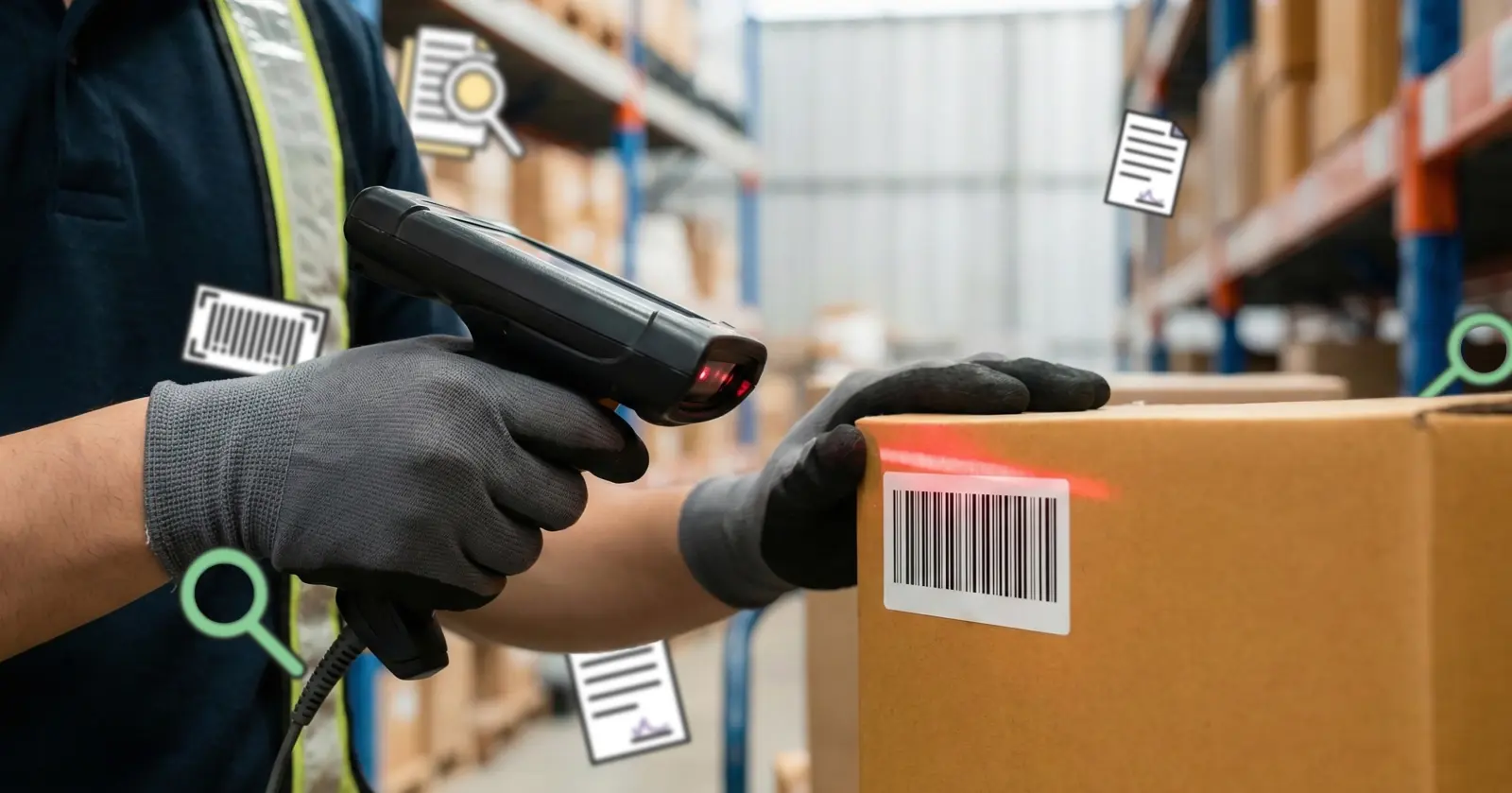
Better product traceability is essential for more circular IT. When reliable information follows a product throughout its life cycle, it becomes easier to manage, repair, reuse, resell, and recycle it effectively.
We have now built a system where every certified product comes with a unique product identifier. This enables better product matching, more transparent product data and paves the way for digital product passports.
Executive summary
Better product traceability is essential for more circular IT. Reliable product information makes it easier to identify, manage, repair, reuse, resell, and recycle products throughout their life cycle. Today, however, much of this information is still fragmented across PDFs, spreadsheets, and separate systems.
To address this, certified product configurations must have a unique Global Trade Item Number (GTIN), based on the globally recognized GS1 standard. This creates a standardized way to match certified products across IT brands, retailers, marketplaces, and other systems.
More than 300,000 GTINs have already been collected for certified product configurations. The system enables more reliable product matching, scalable data exchange, less manual work, and more accurate product listings.
It also creates the foundation for the next step: digital product passports. These will connect certified products with a much broader range of information, such as warranty terms, repair instructions, spare parts availability, software updates, and certification status. For IT purchasers, this can support better procurement, asset management, maintenance, reuse, and end-of-life decisions.
INTRODUCTION
Lack of product data limits circularity
Every year, millions of IT products reach the end of their life, often earlier than necessary. One reason is that important product information — such as warranty terms, repair instructions and spare parts availability — can be difficult to access or may be lost over time. For circular solutions to work, products must be traceable throughout their life cycle, with reliable information about their characteristics, use, and condition. Without this, repairing, reusing, reselling, and recycling products becomes more difficult.
This matters because, for many IT products, a large share of the total sustainability impact occurs during manufacturing, before the product is even used. This includes much of the product’s climate impact. Extending product life is therefore one of the most effective ways to reduce the product’s total sustainability impact.
Product information is fragmented
Today, product information is often stored in separate systems and formats, without alignment with global standards for trusted data exchange. Manufacturers, resellers, and users therefore still rely heavily on PDFs, spreadsheets, and other static documents to share information.
This makes data difficult and time-consuming to collect, compare, and verify. Information may be incomplete, outdated, or presented differently across organizations, creating uncertainty and limiting its usefulness. Without a consistent way to connect reliable data to an individual product, it becomes harder to make informed decisions.
Building a system for structured, shared, and verified product data
To strengthen product traceability and make certified products easier to identify, we began collaborating with GS1, a global not-for-profit organization that develops standards for trusted data exchange. GS1 is widely known for the Global Trade Item Number, or GTIN, which is used to identify products.
Following an extensive development process, we introduced a new criterion in TCO Certified, generation 10, launched in December 2024. Every certified product configuration must now have a unique GTIN. This connects certified products with standardized data platforms, allowing trusted sustainability information to be shared more quickly and reliably across the value chain, including IT brands, certification bodies, retailers, online marketplaces and purchasing organizations. It also provides an important foundation for future digital product passports.
Although the criterion’s aim is straightforward, its implementation has been complex. Some IT brands already used GTINs, but often inconsistently and without linking them to sustainability certifications. For the implementation to succeed, the requirements needed to be understood and applied across several departments within each brand.
The volume of data was another challenge. Because technical specifications vary between product configurations, each configuration requires its own GTIN. A single product model may therefore be linked to several identifiers. To manage these large data volumes efficiently, we developed a customized system for collecting and handling information.
OUTCOMES
More than 300,000 GTINs collected for certified products
Since the criterion was introduced, we have collected more than 300,000 GTINs for certified product configurations. This has created a structured system for matching certified products with standardized identifiers that are already widely used across global commerce.
Using GTINs makes it easier to identify the correct product configuration across different systems, even when product names and descriptions vary between IT brands, retailers, and marketplaces. This reduces ambiguity and creates a more reliable connection between a product and its certification data.
It also enables information to move automatically between systems instead of being transferred manually through spreadsheets and documents. This can reduce administrative work, limit errors, and make it easier to keep information accurate and up to date at scale.
A growing number of global and regional marketplaces now use application programming interface (API) integrations to access certification data. This supports more accurate product listings and makes it easier to confirm that the product being offered is certified.
Most importantly, the system provides an infrastructure that can be expanded over time. The same standardized identifiers can be used to connect certified products with additional sustainability information, creating an important foundation for digital product passports and better product traceability throughout the life cycle.
Benefits of standardized product data
FUTURE
The next step: moving toward digital product passports
The GTIN requirement in TCO Certified, generation 10, creates a solid foundation for connecting more sustainability information to each product’s unique identifier. Today, the identifier provides access to basic information, including the GTIN, model name, and serial number. The next planned step is to require all certified products to have a digital product passport with a much broader range of reliable product data.
Digital product passports will give purchasers and users easier access to information that can help keep products in use for longer, including warranty terms, repair instructions, spare parts availability, product specifications, software updates, and certification status.
Better product data for IT purchasers
For IT purchasers, standardized product data can make it easier to match products with purchasing requirements, verify certification status, and transfer information into procurement, asset management, and device management systems. This can reduce manual data entry, limit errors, and increase confidence that the correct information is being used.
Once products are in use, digital product passports can support maintenance, repair, reassignment, resale, and recycling decisions. They can also help prevent products from being replaced prematurely because important information has been lost or is difficult to find.
Over time, making reliable product data available across systems and organizations can also support sustainability reporting and life cycle assessments. Our goal is to help create a more circular IT industry, where products retain their value for longer, components and materials are recovered more effectively, and the need for new resource extraction is reduced.